• home
  • sights
    • katakolon sights
    • day trips
    • wineries
    • monasteries
    • oscar wilde
  • beaches
  • bars & cafés
  • restaurants & tavernas
  • shopping
    • katakolon shopping
    • street markets
  • traditional villages
    • katakolon villages
    • Dimitsana
    • Stemnitsa
    • Vitina
    • Andritsaina
  • video gallery
  • transportation
  • blog
  • about us
    • about us
    • map
    • contact us

katakolon insights

~ all you need to know

Category Archives: katakolon

oscar wilde

25 Tuesday Mar 2014

Posted by angela in katakolon, oscar wilde

≈ 1 Comment

Tags

greece, history, katakolon, olympia, oscar wilde, poem, sights

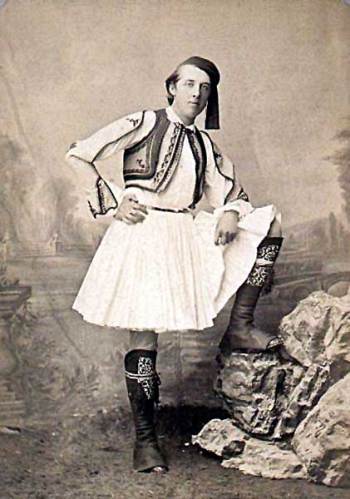
oscar-wilde-greece


Impression De Voyage

The sea was sapphire coloured, and the sky
Burned like a heated opal through the air;
We hoisted sail; the wind was blowing fair
For the blue lands that to the eastward lie.
From the steep prow I marked with quickening eye
Zakynthos, every olive grove and creek,
Ithaca’s cliff, Lycaon’s snowy peak,
And all the flower-strewn hills of Arcady.
The flapping of the sail against the mast,
The ripple of the water on the side,
The ripple of girls’ laughter at the stern,
The only sounds: when ‘gan the West to burn,
And a red sun upon the seas to ride,
I stood upon the soil of Greece at last!

KATAKOLON, 1881

Oscar Wilde (1854–1900)

day trips

23 Sunday Mar 2014

Posted by angela in day trips, katakolon, sights

≈ Leave a comment

Tags

Ancient Messene, ancient sites, archaeology, greece, guided tours, history, katakolon, museums, sights

Ancient Messene

History

Messene was founded in 369 BC by the Theban general Epaminondas following his victory at Leuktra. It was part of the strategic barrier against Sparta, the southernmost of a chain of walled cities including Megalopolis and Argos; these 3 strongholds had to confine Sparta to its own borders once and for all.

In the previous centuries the Spartans had given the Messenians a hard time. Since they were busy with becoming good warriors all the time, they needed other people (servants!) to provide them with their daily bread. In the 8th century BC, they crossed the Taygetos Mountains and invaded the fertile area of Messenia. The people who were living there became slaves and a lot of them fled and settled in other areas all around the Mediterranean. When Sparta was finally defeated in 369 BC, the Theban general Epaminondas invited the Messenians, who had been exiled from the area centuries before, to come back and build the city of dreams!

The ruins might not draw many tourists although it is a remarkable. The charming town of Mavromati sits above the ruins of ancient Messene and provides an exceptional view of the valley all the way to the coast. Systematical excavations of the site began only 25 years ago and continue up to this day.

Site

You will enter this city through one of the original city gates just like ancient travellers did 2300 years ago. The 9 km long city wall is among the best preserved city walls all over Greece. At some points they reach a height of 7 meters.

Once in the archaeological site, take your time to admire the theatre. After 1700 years of silence, the theatre was reopened last summer with a beautiful opera gala. When the archaeologist first started the excavations, they were discouraged. The theatre was practically nonexistent, the only thing left were some retaining walls.

The restoration of the theatre lasted more than 20 years. The archaeologists managed to reunite the scattered pieces and put more than 2000 seats into place. Works at the cavea have not been completed yet. Now it has been restored up to its 15th row. After its completion the capacity is estimated to reach 5000 seats which is half the capacity it had in antiquity.

Other places of interest are the agora, (the town’s large market area), the town’s central shrine and the very impressive stadium and gymnasium which form one architectural unit, an architectural rarity.

From here you will have a breathtaking view over the Messenian plain.

Tip: After your visit of the site, have lunch in the tavern just opposite the spring in the charming town of Mavromati .It is situated  above the ruins of Ancient Messene and provides an exceptional view of the valley all the way to the coast.

day trips

23 Sunday Mar 2014

Posted by angela in day trips, katakolon, sights

≈ Leave a comment

Tags

ancient sites, archaeology, elis, greece, guided tours, history, katakolon, sights, Temple of Apollo Epikourios

Temple of Apollo Epikourios

History

In the beginning of the 7th century BC, the Spartans captured Phigaleia and the inhabitants abandoned their city to save themselves. They consulted the oracle of Delphi to learn how they could recover their city. The oracle told them that they had to fight the Spartans hiring one hundred warriors from a neigbouring city and that god Apollo would help them as well. When the people of Phigaleia were restored to their homeland, they wished to thank Apollo for assisting them in returning to their native city. Thus, 8 km from their city they built, on a natural plateau, a temple dedicated to the god (Apollo the Helper). The first temple of Apollo Epikourios was made of wood. A few centuries later, during the fifth century BC, when Apollo saved them once more from the plague, the inhabitants decided to call Ictinus, the architect from Athens, to build them a new temple so as to satisfy Apollo once more.

Site

This remote temple is situated high up in the mountains at a height of 1130 m. The fact that it is so well preserved has partly to do with the inaccessibility of the area. In other areas they would have used the temple material to build their houses or churches. The temple escaped both these fates since it was not easy to get here. In the autumn of 1987, the monument was covered with a temporary canopy. The tent was constructed to protect the temple against the elements (weather can be quite rough at this altitude).

The temple, as we see it today, was built during the 5th century BC by the very famous architect from Athens, Ictinus (the same architect who built the Parthenon).

The building material used for the temple is the local limestone and what makes this building really special is that it combines all three architectural orders (Doric, Ionic and Corinthian).

Apart from all the special architectural features of the temple, it is worth seeing how technology has been applied in order to preserve the temple. For example, a network of special devices has been set in place to record seismic events and the behavior of the individual parts. If you decide to visit, ask the guard to show you the documentary which explains everything about the restoration project.

ancient elis

18 Tuesday Mar 2014

Posted by angela in katakolon, sights

≈ Leave a comment

Tags

ancient sites, archaeology, elis, greece, guided tours, history, katakolon, museums, sights

Ancient Elis

History

Ancient Elis (58 km from Olympia) was the city which had, under its supervision, the organization of the Olympic Games. One month before the games, all the athletes and trainers had to gather there to train under the supervision of the local judges. They would see if the athletes were good enough, otherwise they were excluded from the Games, and they would divide them into categories. Of course, in those times, they didn’t have birth certificates, so they would determine which category they belonged to from their built and body hair. Two days before the Games began, a procession set out from this city-state and all the athletes and trainers had to walk the whole distance to Olympia (58 km).  Imagine how tiring it must have been to walk such a distance before even competing in the stadium.

This procession was meant as spiritual cleansing, to prepare themselves psychologically for the religious games they were about to take part in.

Site

At the site, the remains are scattered and, with the exception of the theatre, considerably neglected. There are also remains of training facilities, a marketplace (agora) and roman baths.

During the summer a theatre festival takes place here and people from all over the area have the opportunity to watch ancient tragedies, comedies etc. under the moonlight.

Museum

Find out that women in antiquity were just as vain as they are today since a large number of bronze mirrors and jewellery pieces were found in the archaeological site.

agios andreas

16 Sunday Mar 2014

Posted by angela in agios andreas, katakolon

≈ Leave a comment

Tags

agios andreas, ancient pheia, archaeology, greece, guided tours, history, katakolon, pontikokastro, sights, sunken cities, underwater ruins

Ancient Pheia (the submerged city) and Pontikokastro

In the bay of Agios Andreas are the remains of Ancient Pheia, which was an important harbor for ancient Olympia. Pheia was partially sucked into the sea by the earthquake that overthrew the Temple of Zeus at Olympia in the 6th century AD. Remains from the wall of Pheia can be traced under water, which were explored by several archaeologists in the 1970’s. Unfortunately, it is not allowed to dive here since there are so many antiquities. (Pheia is not the only submerged ancient city in Greece. In the southern part of the Peloponnese, there are at least 2 more prehistoric settlements (Pavlopetri and one near Methoni) that were sunk into the sea. There are actual plans to turn these submerged cities into underwater archaeological parks. Greece’s underwater wealth was first shown in the 1957 movie “Boy on a Dolphin” with Sophia Loren.)

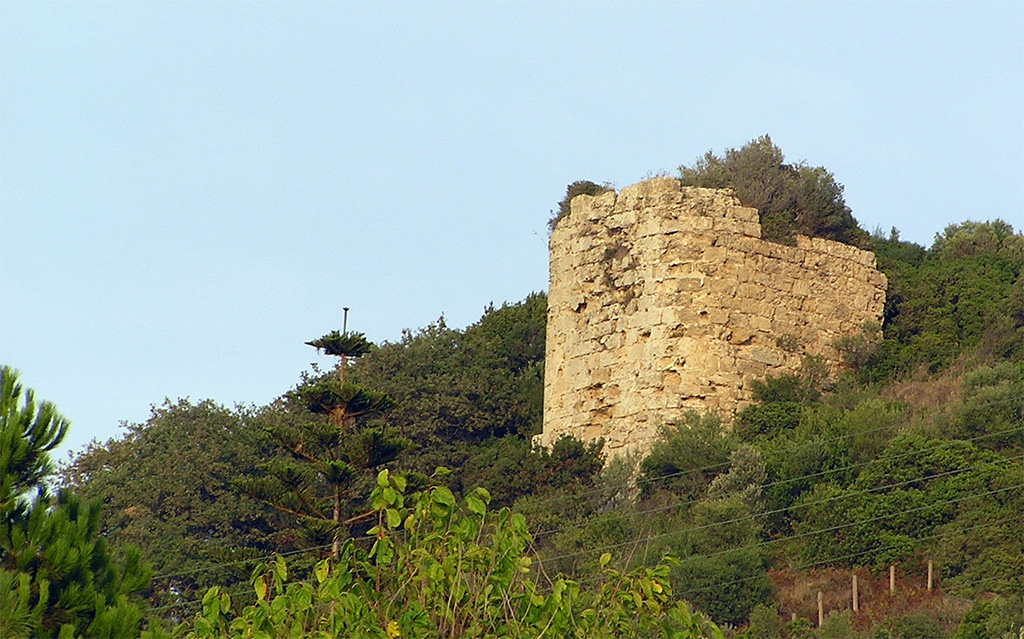
Pheia’s low acropolis had a byzantine castle (Pontikokastro or “mouse” castle), which became the Beauvoir of the VIllehardouins. The steep site is considerably overgrown, with low remains, one or two towers, and a plethora of potentially dangerous cisterns.

The main thing here is the view, still beautiful!


olympia

16 Sunday Mar 2014

Posted by angela in katakolon, olympia, sights

≈ Leave a comment

Tags

ancient sites, archaeology, greece, guided tours, history, katakolon, museums, olympia, sights

Olympia

History

Olympia is the place where the very first Olympic Games were organized. These Games were held in honour of Zeus, once every four years, as part of a religious festival. They were greatly respected and even had the power to suspend wars for a period of three months.

In the beginning these games had a local character and only Greeks from the area of Olympia could take part. Over time, however, they got a Pan-Hellenic character and Greeks from all over the then known Greek world would travel to Olympia in order to be part of this feast. The highest moral award for an Olympic winner was a wreath made out of the branches of a wild olive tree. Victory symbolized by a wreath meant rather more than sponsors, deals and advertising campaigns. The Olympic winners won immortal fame.

The archaeological site

Don’t miss out on the opportunity to run the original Olympic track. It’s a once in a lifetime opportunity! Other spots of interests are the training facilities where the athletes would warm up their muscles, the hotel for VIPs’ only and the place where the Olympic flame is lit twice every four years.

The archaeological museum

The Archaeological Museum of Olympia houses the most important finds of the excavations, which began in 1875 by the German archaeologists.

Some of the highlights are the original marble sculptures of the Zeus temple, the metopes of the temple which depict the 12 labours of Hercules (the idol of all muscle –men in ancient times), the Nike statue and the late-classical Hermes statue which has the perfect proportions. Don’t forget to walk around the statue because his “behind” is really worthy of seeing as well. Other finds of interest are the ancient “strigils”, scrapers. In ancient times the athletes would get really dirty since they would rub themselves with olive oil and sand to protect their skin from the sun. After training they would use these scrapers as a kind of peeling.

Hermes of Praxiteles

The museum of the history of the Olympic Games

Here you will find “ancient Playmobil”, small stylized statuettes of animals which were actually the offerings of the poor people. If you didn’t have the money to sacrifice a real animal to Zeus, you could buy a little votive offering at one of the ancient souvenir stands in Olympia and dedicate this to Zeus.

katakolon

14 Friday Mar 2014

Posted by angela in katakolon, mythology, sights

≈ Leave a comment

Tags

greece, guided tours, history, katakolon, museums, mythology, olympia, oscar wilde, shopping, sights

Katakolon

History

Today Katakolon, also known as Katakolo, is a little picturesque fishing village where many cruise ships anchor in order to give their guests the opportunity to visit Olympia. Imagine that all the shops on the main street only open whenever there is a cruise ship. On all other days the shops are closed here and it’s virtually a ghost town.

Until the end of the 19th century, this little harbor was very important for the export of the little black currants to the countries of Western Europe. Unfortunately, the currant trade collapsed and now the package houses which once stored the currants have been converted into souvenir shops.

It was also used as a gateway to Olympia for the early travellers. Oscar Wilde was here and even wrote a beautiful poem as he approached the shore. He came to visit Olympia and claims to have been present the very moment the statue of Hermes was unearthed. This was probably wishful thinking but it is a fact that he was expelled from University since he came back late, from his visit to Olympia, to sign up for the semester.
katakolon-port-history

Museums

Museum of ancient Greek technology

Discover the ancient Greek world as soon as you greet Katakolon Port. Only 150 meters from the pier, you will find the Museum of Ancient Greek Technology. So, take a walk beyond the souvenir shops and take a walk back in time to uncover the mystery of “how it was all done.”  Enjoy live demonstrations of the ancient Greek devices and inventions in this internationally acclaimed museum which functions under the auspices of the Municipality of Pyrgos. Many of the exhibits have been transported for exclusive exhibitions to museums from neighbouring Cyprus to distant Australia. All the exhibits have been constructed by just one man, Kostas Kotsanas, through 20 years of assiduous research and study of the ancient Greek and Latin literature, Arabic manuscripts, vase paintings and the relative archaeological finds.

This unique museum, situated next to the Katakolon railway station, includes approximately 250 functional reproductions of ancient Greek devices and inventions. The complexity will be simplified during the live demonstrations of the wondrous technological achievements of the ancient Greek civilization. The exhibits range from the catapults used by Alexander the Great, the first clock, Plato’s alarm clock and the first automatic vending machine to the first robot, the first “cinema” and the first computing device in history. These exhibits cover the period from 2000 BC to the end of the ancient Greek world. It is the most comprehensive and credible museum of its kind worldwide. Its aim is to prove that the technology of the ancient Greeks, towards the end of their world, was shockingly similar to the beginning of our modern technology.

Museum of Ancient Greek Technology

Museum of ancient Greek musical instruments

This fascinating museum, located next to the Katakolon church, houses 42 ancient Greek musical instruments. Admire the ancient Greek instruments as you listen to an ancient song of love on the hydraulis (ancient organ), observe the harp of Sappho who played as she recited her renowned poems, become enchanted by the myth of Hermes’ lyre, witness the grandeur of Appollo’s guitar, see the stringed instruments which accompanied symposiums and Dionysian rituals and study the monochord of Pythagoras.

THE LYRE of HERMES
HERMES WAS ONE OF THE MANY SONS OF ZEUS AND EVEN AS A BABY IT WAS CLEAR THAT HE WAS GOING TO BE CRAFTY BEYOND COMPARE AND A SLY GOD.
WHILE STILL A TODDLER, HE STROLLED OUTSIDE HIS CAVE SEEKING A PLAYTHING. AFTER FINDING A TORTOISE AND PLAYING WITH IT FOR A DAY (A DAY IN THE LIFE OF A GOD COULD BE EQUIVALENT TO A CENTURY FOR HUMANS), THE TORTOISE, UNFORTUNATELY, DIED. DISTRAUGHT BY HIS LOSS, HE DECIDED TO KEEP HIS COMPANION FOREVER BY TURNING HIM INTO A MUSICAL INSTRUMENT. HE THEN TOOK THE SHELL AND A FEW SHEEP INTENSTINES AND CREATED THE LYRE.
APOLLO’S KITHARA (GUITAR)
WHEN HERMES WAS OLDER (PROBABLY A DAY OR SO IN GOD YEARS), HE STOLE SOME OXEN FROM HIS HALF-BROTHER APOLLO AND HID THEM SO WELL THAT APOLLO NEEDED ALL HIS ORACULAR TALENTS AND TECHNIQUES TO FIND THEM. IN THE MEANTIME HE GOT HUNGRY, SLAUGHTERED ONE OF THE OXEN, AND ATE THE MEAT. SOON, APOLLO DISCOVERED HIS WHEREABOUTS AND, OBVIOUSLY ANGRY AS A RAGING BULL, CONFRONTED THE THIEF. HERMES, USING HIS CUNNING INSTINCT, PLAYED A TUNE FOR HIM ON HIS LYRE. DRAWN BY THE BEAUTY OF THE TUNE, APOLLO SOFTED.  HERMES THEN OFFERED APOLLO HIS PRECIOUS LYRE AS A GIFT OF RECONCILIATION. APOLLO THEN DEVELOPED THIS MAGICAL INSTRUMENT FURTHER INTO THE MAJESTIC KITHARA (GUITAR) WE KNOW TODAY.

Experience the hidden gems that await you in Katakolon for a most enthralling and memorable visit.
visiting olympia

23 Sunday Feb 2014

Posted by angela in katakolon, olympia, sights

≈ Leave a comment

Tags

ancient sites, archaeology, greece, guided tours, history, katakolon, museums, olympia, sights

kastro restaurant

23 Sunday Feb 2014

Posted by angela in agios andreas, katakolon, restaurants & tavernas

≈ Leave a comment

Tags

agios andreas, food, greece, katakolon, restaurants, sunset

Kastro (Agios Andreas)

kastro restaurant

At Kastro restaurant you can enjoy Mediterranean cuisine, both traditional and non. 

A selection of meat, pasta and vegetarian dishes are served here; while the variety of seafood platter is “pentanostimo” (five times tasty)! Don’t forget to order the OUZO!

Undeniably a MUST.


kastro bar

23 Sunday Feb 2014

Posted by angela in agios andreas, bars & cafés, katakolon

≈ Leave a comment

Tags

agios andreas, bars, cafés, entertainment, greece, katakolon, sunset

kastro bar

The place to enjoy the breathtaking sunset while sipping on a cocktail.

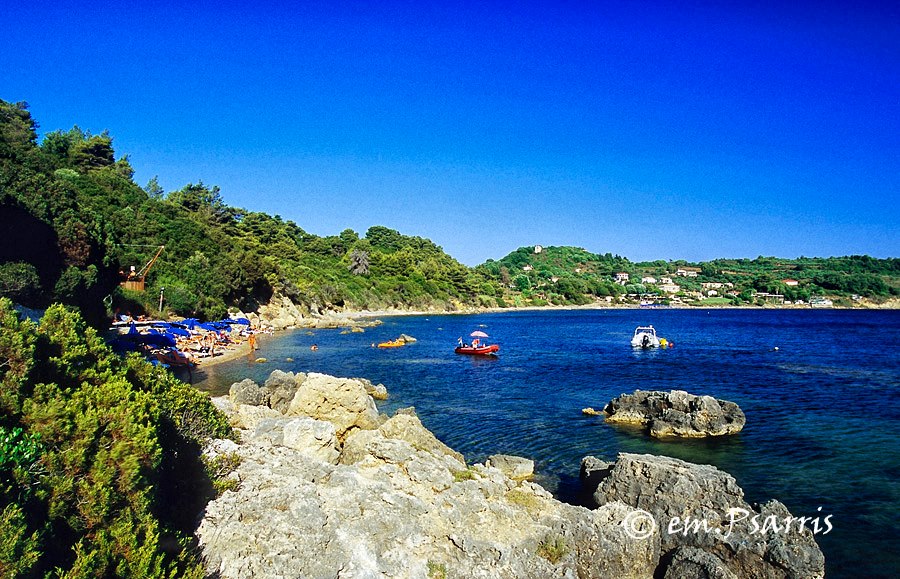
Behind the picturesque harbour of Katakolon, is the beach of Agios Andreas with its small coves, sharp rocks, deep turquoise waters and pine trees that come right down to the sea making up its unique landscape. The beach of Agios Andreas charms the visitor and especially divers, since its sea-floor has been described as magical.

This beach is especially suitable for families with young children as the rocks surrounding the beach form the boundaries of a natural swimming pool.

Sunbeds and umbrellas are available free of charge for customers.

Newer posts →

This slideshow requires JavaScript.

FACEBOOK

FACEBOOK

Blogroll

  • cruise critic
  • trip advisor
  • katakolon beach
  • TRANSFERS & TOURS

Enter your email address to follow this blog and receive notifications of new posts by email.

Tags

aethlios agios andreas alpheus amaliada Ancient Messene ancient pheia ancient sites ancient theatre ancient Olympia archaeology artemis bars beaches cafés cruises Dimitsana Domaine Mercouri eastern Mediterranean elis entertainment extra virgin olive oil food greece Greek cuisine Greek museums greek salad Greek street market guided tours hagiogrphy henry miller history International Museum Day John the Baptist kastro katakolon Katakolon train kramasti Lawrence Durrell local products mercouri Mercouri Estate michael aaron williams monasteries municipal market museums mythology nemea olympia Olympia International Film Festival olympian race orthodox oscar wilde Peloponnese poem pontikokastro pyrgos restaurants shopping sights skafidia son of Zeus spartathlon street art greece sunken cities sunset taverna Temple of Apollo Epikourios the travel insiders traditional Greek TRAINOSE underwater ruins wine wineries wineries of Ilia zorba the greek
katakolon

Blog at WordPress.com.

Privacy & Cookies: This site uses cookies. By continuing to use this website, you agree to their use.
To find out more, including how to control cookies, see here: Cookie Policy
  • Subscribe Subscribed
    • katakolon insights
    • Already have a WordPress.com account? Log in now.
    • katakolon insights
    • Subscribe Subscribed
    • Sign up
    • Log in
    • Report this content
    • View site in Reader
    • Manage subscriptions
    • Collapse this bar
 

Loading Comments...